Nieuws
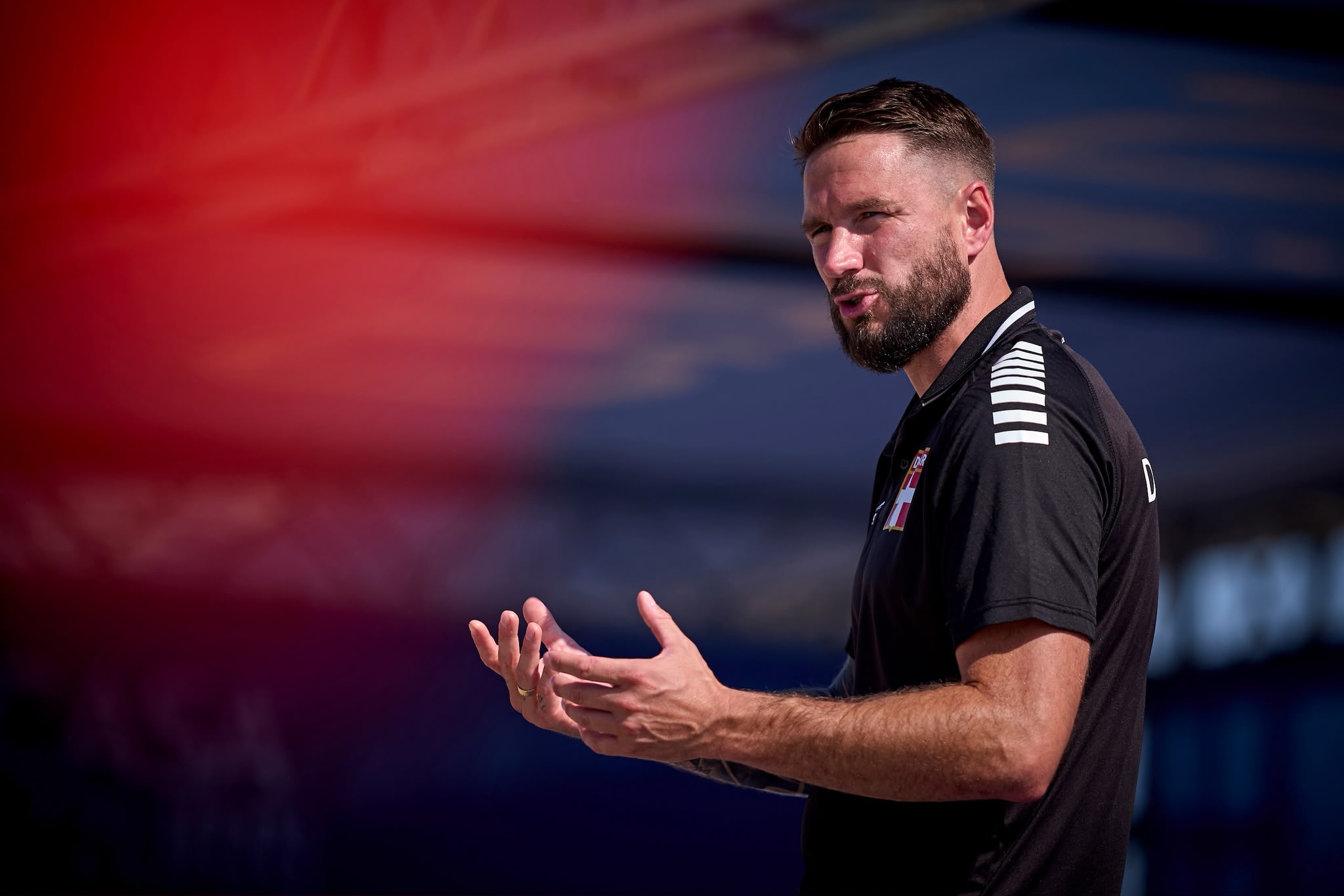
Casper Dorph the new leader of Union Vrede
By Union Vrede FC editorial team7 October 2026
From Europe's top four to our next challenge in Alanya
Fourth in Europe. In his very first season as Denmark's national coach.

Now Casper Dorph is taking on a new responsibility: leading our Union Vrede men at the World Winners Cup in Alanya.
He knows what it means to lead a team in matches where belief is put to the test, every decision counts and the smallest detail can change everything. He brings that experience to our club. And his message is clear:
“We will respect every opponent, but fear no one.”
Union Vrede takes on this challenge as Belgian champions and winners of the Belgian Cup. Behind those trophies lie the hard work, the character and the collective will of a group that has learned to win together.
In Alanya that will will be tested once again. International opponents await there, each with their own history, qualities and ambitions.
At the head of our men will be someone who has already shown how far a team can go when it believes in itself.
An adventure that began on the sand
Casper's story begins long before the European semi-final and the responsibility of leading his country. In 2012 he discovers beach soccer at an amateur tournament. A year later he is already representing Denmark in Malmö.
The sand, the intensity and the bond between teammates grip him straight away. An adventure begins that will take him all over the world and, step by step, shape him into the leader we welcome today.
He helps build Copenhagen Beach Soccer Club from scratch. At Rostocker Robben in Germany and Vetlanda in Sweden he gains valuable experience and wins national titles with both clubs. Within the Danish national team he grows from player to captain, taking on ever more responsibility while learning from coaches such as Terry Bowes and Llorenç Gómez.
At the end of 2025 Casper becomes Denmark's national coach. What follows is a second place in El Salvador, qualification for the European Superfinal and ultimately fourth place in Europe — in his words, the best result in the history of Danish beach soccer.
But when he talks about that campaign, it is mostly about what he saw change in his players: the confidence to step onto the sand against the strongest teams and take them on without fear.
That confidence now has a new club crest to defend.

A new leader for our challenge in Alanya
Our joint preparation time in Alanya will be short. Every training session counts. Every conversation matters. Trust has to grow quickly, roles have to be clear and individual qualities have to make the whole team stronger.
Casper is already setting out his expectations: players must arrive prepared, take responsibility and be willing to work for one another.
He wants courage on the ball and discipline the moment we lose it. Players who dare to make decisions under pressure and find the strength to help the teammate beside them.
His words about the tournament leave no doubt about the mindset with which we will take the field:
“We respect everyone, but we are not going to Alanya just to take part. We are going there to compete.”
Behind that determination stands a man who places great value on family, friendship and the relationships he has built over the years. The 37-year-old Dane speaks warmly about his wife Rikke and the people around him.
He brings that same commitment to his work as a coach. He wants to create an environment in which players feel trusted, dare to take responsibility and can fully show their qualities.
Our supporters have a place in this story too. Every message, every comment and every share can reach the team at a moment when that support is needed most.
From Belgium to the sand of Alanya: you keep that bond alive.
Union Vrede has its new leader for Alanya.
Ahead of him is a team that already knows the taste of victory. Ahead of us is a challenge that will demand everything we have to give.
Welcome to Union Vrede, Casper.
Alanya is our next chapter. Let's write it together.

The full interview with Casper Dorph
Who is the man behind the coach? What has his international journey taught him? And what does he expect from Union Vrede in Alanya? In the interview below, Casper tells his story and shares his vision with our players, staff and supporters.
1. Can you briefly introduce yourself and tell our supporters something about the person behind the coach?
My name is Casper Dorph, I'm 37 years old and I'm from Denmark.
Beach soccer has been a huge part of my life for many years. I started playing for the Danish national team in 2013. Since then the sport has taken me all over the world and given me incredible experiences, friendships and memories. Today I'm Denmark's national coach, and I'm extremely proud of that.
But behind the coach is a fairly down-to-earth person. I'm married to my wife Rikke and I place great value on family, friendships and the people around me.
By nature I'm very competitive and ambitious, but for me sport is about much more than winning. I strongly believe in hard work, discipline and constantly trying to get better — but also in building strong relationships and enjoying the journey together.
That's probably the best way to describe me: I love competing, I love developing people and teams, and I put a lot of my heart into the things that matter to me.
2. How did your journey in football and as a coach begin?
My football story began like it does for many kids: simply because I loved playing the game.
Later I discovered beach soccer, and that completely changed my path. In 2013 I played my first tournament with the Danish national beach soccer team and immediately fell in love with the sport.
My development towards coaching and leadership actually began long before I officially became a coach. I helped build Copenhagen Beach Soccer Club from scratch. That taught me a lot about creating a team and an environment — not just tactically, but also in terms of culture, discipline and the standards you expect from one another. I think part of the culture we built there has had a positive influence on Danish beach soccer ever since.
During my years with the national team I was also lucky enough to work with different coaches and personalities. People like Terry Bowes and later Llorenç Gómez brought different ideas and perspectives to the game. I've always been very curious and tried to learn as much as possible from the people around me. I don't believe in simply copying one coach. I try to take the best from everyone I work with and combine it with my own experiences and ideas.
During Llorenç's time as national coach, I gradually took on more responsibility myself. When he wasn't in Denmark, I helped lead training sessions and filled a kind of assistant coach role. At the same time I tried to pick up as much as possible from him, especially in terms of tactics, training methodology and understanding the finer details of the game.
So becoming head coach wasn't a sudden transition. It was something that had developed over many years through playing, building teams, creating a culture, learning from different coaches, studying the game and gradually taking on more responsibility.
For me it feels less like I stopped being a player and became a coach, and more like the next chapter of the same adventure.
3. How did you first discover beach soccer, and what attracted you most to the sport?
I first discovered beach soccer in 2012, when I took part in an amateur tournament. I immediately found it fun, exciting and very different from the football I was used to.
Then in 2013 I got the chance to represent Denmark for the first time at a tournament in Malmö, Sweden. That's where I truly fell in love with the sport.
I loved the intensity and the unpredictability of the game. The sand forces you to adapt constantly, and technically it challenges you in a completely different way. But everything around the sport attracted me too: the music, the atmosphere, playing barefoot on the sand, travelling together and the strong bond you build with your teammates.
There's a special culture around beach soccer that's hard to explain until you've experienced it yourself.
What also really appealed to me was how much there was to learn. Even today, after so many years in the sport, I still feel that way. The game keeps evolving, and there are always new tactical details, techniques and ideas to discover.
What started in 2012 as a fun amateur tournament has ended up becoming a huge part of my life.
4. Can you tell us more about your coaching career and the teams you have worked with so far?
My coaching career developed quite naturally alongside my years as a player.
A large part of my early experience came through Copenhagen Beach Soccer Club, which I helped build from scratch. I wasn't only involved as a player, but also in developing training sessions, setting standards and creating the culture around the team. That gave me my first real experience of leadership and of building an environment in which players could develop together.
Over the years I also had the chance to work with and learn from clubs outside Denmark, including Rostocker Robben in Germany and Vetlanda in Sweden. I was lucky enough to win national championships with both clubs. Those experiences gave me valuable insight into different beach soccer cultures, training environments and ways of approaching the game.
With the Danish national team I also gradually became more involved on the coaching side. During Llorenç Gómez's time as national coach, I often took charge of training sessions in Denmark when he wasn't there. I worked closely with him to understand his tactical ideas and methodology.
Alongside senior beach soccer, I've also been heavily involved in developing the sport in Denmark. That has included working with younger players and trying to create better opportunities and a pathway through which the next generation can discover the sport.
At the end of 2025 I got the opportunity to become Denmark's national coach. Taking responsibility for a team I had represented as a player for so many years was, of course, very special for me.
My first season as national coach has already given me some incredible experiences. In El Salvador we played against some very strong international teams and managed to beat two countries that had already taken part in the FIFA Beach Soccer World Cup. In the end we finished an exceptionally strong second in the tournament.
Later in the season we qualified for the European Superfinal and finished fourth in Europe — the best result in the history of Danish beach soccer.
I still see myself as someone relatively early in his coaching career. I'm ambitious, but I'm also very aware that I still have a lot to learn. That's one of the things I enjoy most about coaching: you're never really finished developing.
5. What has your experience with the Danish national beach soccer team taught you, both professionally and personally?
The Danish national team has taught me an enormous amount, both professionally and personally. I've experienced the team from different perspectives: first as a player, later as captain, then by taking on more responsibility around the team, and now as national coach.
Professionally, one of the biggest lessons has been that talent alone is never enough. Especially for a country like Denmark, where we don't have the same resources or beach soccer traditions as some of the biggest nations, our strength has to come from our culture, discipline, preparation and willingness to work for one another.
I've also learned how important the small details are at international level. The difference between winning and losing can be one decision, one moment of concentration or one action. That's made me very interested in constantly analysing the game and looking for small areas where we can improve.
Personally, the national team has taught me even more about people. When you travel together, win together, lose together and go through difficult moments together, you build relationships that go far beyond sport.
It has also taught me a lot about responsibility and leadership. As captain, and even more so now as coach, you realise that leadership doesn't just mean demanding things from people. It's about understanding them, building trust and giving them an environment in which they feel confident enough to take responsibility themselves.
Perhaps the biggest lesson is that a group of people can achieve far more than outsiders expect when they truly believe in the same direction and are willing to work for one another.
6. What are you most proud of from Denmark's recent international campaign?
Of course I'm incredibly proud of our fourth place in Europe. It was the best result in the history of Danish beach soccer. Achieving it in my first season as national coach made it even more special.
But what I'm probably most proud of is the way we did it and the development I saw in the team over the course of the season.
We started the year in El Salvador, where we showed we could compete internationally and beat two teams with World Cup experience. Later we went to Moldova and, after some very strong performances, qualified for the European Superfinal.
At the Superfinal I felt we took another step forward. We weren't just there to take part or to be happy with qualifying. We showed we could compete with some of the best teams in Europe. We reached the semi-finals and eventually finished fourth after some incredibly tight matches.
For me the greatest achievement is the change in mentality. I want our players to step onto the sand believing we can compete with anyone. There must be respect for every opponent, but never fear.
I'm hugely proud of the results, but even prouder that we're starting to build that belief within the group.
Fourth place was a fantastic achievement, but hopefully it isn't the end of something. Hopefully it's the beginning of what this team can become.

7. What convinced you to take on the challenge of head coach of Union Vrede for the World Winners Cup in Alanya?
For me it was a really exciting opportunity and a challenge I found hard to say no to.
The World Winners Cup is a fantastic tournament. The chance to coach a team from another country, work with a new group of players and test myself in a completely different environment really appealed to me.
I already knew some of the players a little. From my conversations with the people around Union Vrede, I sensed real ambition and a genuine desire to develop and compete. That's something I immediately connect with.
I also see it as a great opportunity to grow as a coach myself. When you join a new team, you can't simply expect everything to work exactly as it does with your national team. You have to understand the players quickly, recognise their strengths and find a way of playing that gives the group the best possible chance of success.
We won't have months to prepare together. Building trust, creating clear roles and getting everyone working in the same direction will therefore be very important.
That challenge appeals to me. I'm coming to Alanya with a lot of energy, ambition and curiosity, and I'm really looking forward to seeing what we can achieve together.
8. What did you know about Union Vrede before joining us, and what are your first impressions of the club and its project?
To be completely honest, my knowledge of Union Vrede was fairly limited before this opportunity came along. I knew a little about the team and some of the players, but I wouldn't say I knew the club inside out.
Since then I've tried to learn as much as possible, and my first impressions are very positive. From the conversations I've had, I sense a genuine passion for beach soccer and the ambition to develop the team and the project further.
I also appreciate the openness I've experienced. They've given me the opportunity to bring my ideas and experience. At the same time, I want to respect what's already there and understand the team's identity.
That's important to me. I'm not coming to Union Vrede to change everything completely in a few weeks. My job is to understand the players, recognise the strengths of the group and hopefully add a few details that help us perform at our best in Alanya.
I'm still getting to know the club and the people behind it. But my first impression is that there's a lot of enthusiasm and a genuine desire to take another step forward. I'm looking forward to being part of that and getting to know everyone better.
9. How would you describe your coaching philosophy, and what style of beach soccer do you want your team to play?
My coaching philosophy starts with a few simple things: discipline, hard work, courage and trust in one another.
Tactically, I want my teams to be organised and to understand why we do things, rather than simply following instructions. Beach soccer is too fast and unpredictable for a coach to control every situation from the sideline. So players need to understand the game and have enough confidence to make decisions themselves.
With the ball, I want us to be brave. I like players who feel comfortable under pressure, want the ball and aren't afraid to take responsibility. At the same time, I want variety in our game. We need to be able to play through the goalkeeper, use the flanks, find the pivot, play direct when the chance arises and create chances in different ways. I don't want us to become predictable.
Without the ball, I expect everyone to work. I believe strongly in discipline, communication and reacting immediately when we lose possession. The willingness to work for the player next to you is non-negotiable for me.
But probably the most important thing is creating an environment in which players aren't afraid to make mistakes. I want to give them clear principles and structure, but within those principles they need freedom to express themselves.
Ultimately, I want my teams to play with intensity, intelligence and personality. I want us to respect every opponent, but I never want us to be afraid of anyone.
10. With limited preparation time and players from different backgrounds, what will your main priorities be before the tournament?
The biggest challenge, of course, is time. We'll have players with different backgrounds, different experiences and different understandings of the game. So we need to keep things clear and simple.
Before we arrive in Alanya, my main priority is for every player to take responsibility for his own preparation. I've encouraged them to spend as much time as possible on the sand, get plenty of touches on the ball and arrive physically ready to compete. With the limited time we have together, we can't spend the first few days building up our fitness.
I've also already been in touch with the team and shared a few points they can work on before we meet. For me, especially in beach soccer, it will be very important that players feel comfortable on the ball under pressure and can make good decisions in stressful situations.
Once we're together, my first priority will be to get to know the players properly and understand their individual strengths. I don't want to force players into a system that doesn't suit them. I want to find a structure that lets us use the qualities we actually have in the squad.
After that, it's about clear roles and a few simple tactical principles that everyone understands. We don't need twenty different tactical solutions. We need a few that everyone believes in and can execute under pressure.
And finally, we need to become a team very quickly. At a tournament like this, chemistry, communication and trust can be just as important as tactics.
If we can arrive prepared, understand each other quickly and get everyone working in the same direction, then I believe we'll give ourselves the best possible foundation to perform in Alanya.
11. Union Vrede takes on this challenge as Belgian champions and winners of the Belgian Cup and Super Cup. Does that bring extra motivation or pressure?
For me it brings far more motivation than pressure.
Winning the Belgian championship, the Cup and the Super Cup tells me this is a group of players who already know what it takes to compete and win together. That mentality is something we should be proud of and take with us to Alanya.
At the same time, we have to understand that the World Winners Cup is a completely different challenge. We'll face strong teams and players from different beach soccer cultures. So what happened in Belgium won't automatically give us anything when we step onto the sand in Alanya.
But I like expectations. If you want to compete at this level, there has to be ambition and a bit of pressure. It means what you're doing matters.
Our job is to turn that pressure into energy. We need to arrive with confidence thanks to what Union Vrede has already achieved, but also with humility and the hunger to prove ourselves against international opponents.
We respect everyone, but we are not going to Alanya just to take part. We are going there to compete.
12. What are your expectations and goals for the World Winners Cup in Alanya?
My expectations are high, but I also think we have to be realistic about the challenge ahead of us.
We're bringing together a group of players with different backgrounds and will have little time to prepare as a full team. That's why I don't want to attach a specific final ranking to the tournament before we've even started.
My first goal is to create a team that is organised, confident and very difficult to play against. I want us to keep growing during the tournament and show more and more of our identity every time we step onto the sand.
But we are competitive. We're not travelling to Alanya just to take part in the World Winners Cup or to enjoy the experience. We want to win matches, challenge strong international teams and see how far we can go.
In a tournament like this, I think you have to focus on the next challenge rather than looking too far ahead. First we need to get through the group stage and put ourselves in a position where anything is possible.
If we can leave Alanya knowing that every player gave everything for the team, that we competed without fear and that we showed people what Union Vrede is capable of, then we can be proud.
But once the tournament starts, we'll always be looking for the next win.
13. Finally, what message would you like to give to the players, staff and supporters of Union Vrede?
First of all, I want to thank you for your trust and for the way you've welcomed me to Union Vrede. I'm genuinely excited about this opportunity and look forward to meeting everyone and becoming part of the club.
To the players: come to Alanya prepared, hungry and ready to give everything for each other. We have very little time together, so every training session, every conversation and every moment counts. Be open, be curious and don't be afraid to take responsibility.
To the staff: I'm looking forward to working together and creating the best possible environment for the players to perform.
And to the supporters: you have an important role too. Even if you can't be with us in Alanya, it's important that the players can feel your energy from home.
Follow our adventure on social media, send the team your positive thoughts, leave comments, share the posts and cheer us on throughout the tournament. That support is priceless. When players see and feel that people at home are following them, believing in them and backing them whatever happens, it gives the whole team something extra.
We will do everything we can to represent Union Vrede with passion, energy and ambition. We will respect every opponent, but fear no one.
I don't know exactly where this adventure will take us, but I do know how I want us to approach it: together. Players, staff and supporters.
Let's go to Alanya, enjoy the challenge, compete with everything we have and create memories together.
Union Vrede |
